Move-In Weekend Is Harder on the Body Than It Looks
Every August, Lubbock fills back up with Texas Tech students hauling furniture, mini fridges, and boxes up multiple flights of dorm stairs, often in a single exhausting weekend. Dr. Brett Chavez, D.C. sees a reliable uptick in low back and shoulder strain at Back 2 Health Chiropractic in the weeks that follow, usually from students who aren’t used to repetitive heavy lifting and push through discomfort because there’s simply too much to unpack to stop and rest.
The Lifting Mistakes Dr. Chavez Sees Most
Move-in injuries tend to follow a predictable pattern: twisting while carrying an awkward box up a stairwell, bending at the waist instead of the knees to grab something off the floor, and carrying mismatched loads on one side of the body repeatedly because it’s faster than making an extra trip. None of these are dramatic individually, but repeated over a full day of moving, they add up to real strain.
What Happens Once Classes Start
Once the semester actually begins, a different kind of strain takes over. Long lecture hall sessions in less-than-ergonomic seating, hours hunched over a laptop in the library, and a heavy backpack carried unevenly on one shoulder all contribute to the same neck, shoulder, and upper back tightness Dr. Chavez treats in returning students every fall. A semester’s worth of that posture, left unaddressed, tends to compound rather than resolve on its own.
How Chiropractic Care Addresses Both
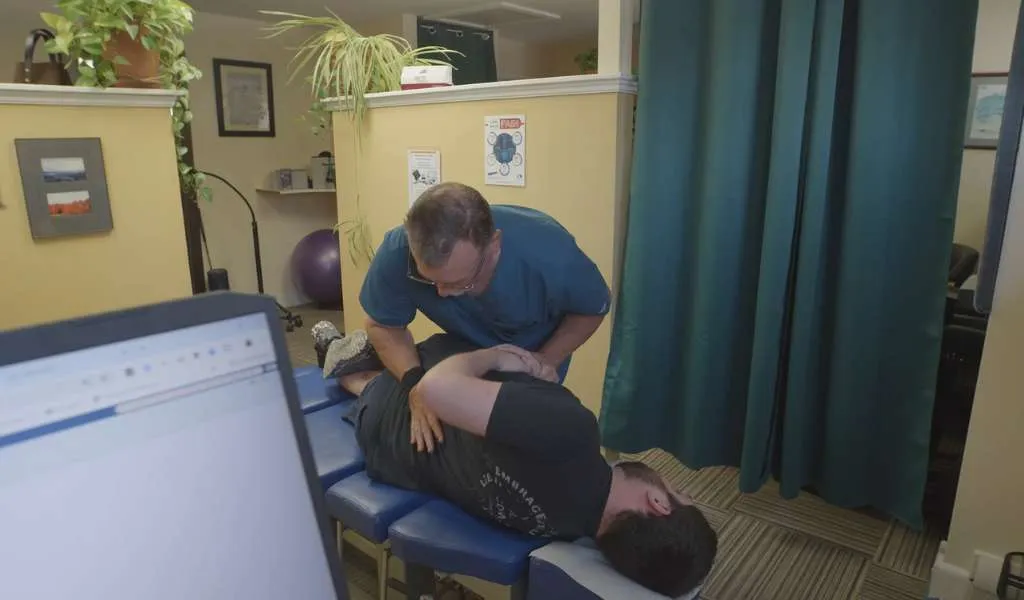
For move-in related strain, the priority is addressing the acute joint restriction and muscle guarding that follows a day of unfamiliar heavy lifting, restoring normal mobility before a compensating pattern has a chance to set in. For the semester-long postural strain, the focus shifts to identifying and correcting the specific restrictions building up in the neck and upper back from prolonged sitting and screen time.
Chiropractic care at Back 2 Health addresses the joint restrictions directly, and for students dealing with more significant tightness, massage therapy helps release the accumulated muscle tension that builds over a semester of the same posture day after day.
Practical Advice for the Rest of the Semester
Dr. Chavez encourages students to distribute backpack weight across both shoulders rather than one, take breaks during long study sessions to move and change position, and pay attention to laptop height in dorm rooms and libraries where the setup is rarely designed with posture in mind.
Building a Habit Early
A lot of the neck and back issues Dr. Chavez sees in adults trace back to postural patterns that started in college and never got corrected. Addressing strain early in a student’s time in Lubbock, rather than letting a semester of poor posture become years of it, tends to make a real difference down the line.
Recognizing When It’s More Than Normal Soreness
General muscle fatigue from a day of hauling boxes is expected and usually settles within a few days. What’s worth getting checked is pain that’s sharp with a specific movement, tingling or numbness radiating into an arm or leg, or stiffness that isn’t improving after several days of rest. Those patterns suggest something beyond ordinary fatigue and are worth an actual evaluation rather than waiting out the semester hoping it resolves on its own.
If move-in left you with a sore back, or a new semester’s schedule is already showing up as neck and shoulder tightness, schedule a visit with Dr. Chavez at Back 2 Health Chiropractic.