An Old Technique With a Specific Purpose
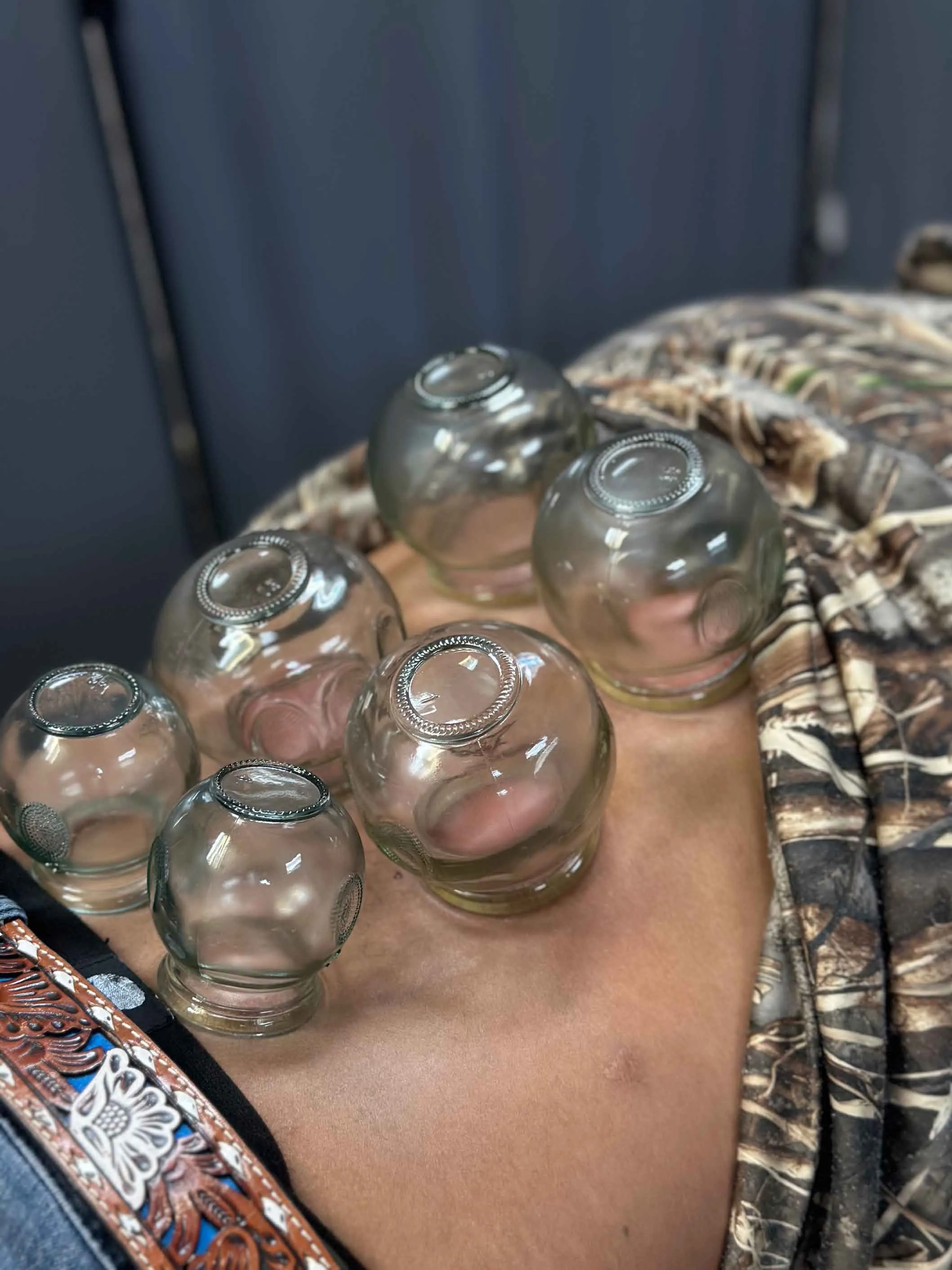
Fire cupping tends to draw curious questions from new patients at Back 2 Health Chiropractic, partly because of the distinctive circular marks it can leave temporarily on the skin. Dr. Brett Chavez explains it as a technique that uses controlled heat to create suction inside a glass or silicone cup, which is then applied to the skin over a targeted muscle group. That suction lifts and separates the layers of skin, fascia, and underlying muscle rather than compressing them the way most manual therapy does.
Why Decompression Matters for Recovery
Most soft tissue treatments, including massage, work by applying pressure into the tissue. Cupping does the opposite: it creates negative pressure that pulls tissue upward. That difference matters for certain kinds of muscle tightness and fascial restriction, particularly in areas where layers of tissue have become stuck or adhered to one another from repetitive use, old injury, or chronic tension. The suction increases local blood flow to the area, which supports the tissue’s own recovery process.
Who Tends to Benefit Most
Dr. Chavez sees the clearest results with athletes managing chronic muscle tightness in larger muscle groups like the back, shoulders, and thighs, patients recovering from soft tissue injuries where fascial restriction is part of the picture, and anyone whose muscle tension hasn’t fully responded to massage or stretching alone. It’s frequently used as part of a broader sports rehabilitation plan, particularly for athletes managing recurring tightness tied to their specific sport.
What a Session Feels Like
Patients typically describe a pulling or tight sensation as the cups are applied, which most find tolerable and even relaxing once the initial suction settles. The circular marks that sometimes appear afterward are from increased blood flow to the area, not bruising in the traditional sense, and they generally fade within several days. Dr. Chavez adjusts the level of suction based on the area being treated and how the patient responds.
How It Fits Into a Broader Plan
Fire cupping is rarely used as a standalone treatment. It’s most effective as part of a plan that also includes chiropractic adjustments to address any joint restrictions contributing to the muscle tension in the first place, since releasing tight fascia without correcting the underlying joint mechanics driving that tension tends to be a short-term fix. Many patients also pair it with professional stretching to maintain the increased mobility cupping helps create.
Supporting Recovery Between Sessions
- Stay well hydrated after a session, since this supports the body’s process of clearing the increased blood flow to the treated area
- Avoid intense training on the treated muscle group for a day or so to let the tissue respond to treatment
- Apply gentle movement rather than complete rest, which helps maintain the mobility gains from the session
- Mention any unusual or lasting discomfort at your next visit so Dr. Chavez can adjust the approach if needed
Is It Right for You
Chronic muscle tightness or fascial restriction that hasn’t fully resolved with other soft tissue work is the clearest signal fire cupping is worth discussing. Dr. Chavez evaluates each patient’s specific pattern before recommending it as part of a care plan.
If you’re an athlete or active patient dealing with stubborn muscle tightness, schedule a new patient visit at Back 2 Health Chiropractic in Lubbock, TX and ask Dr. Chavez whether fire cupping belongs in your recovery plan.
References
- National Center for Complementary and Integrative Health, “Cupping,” nccih.nih.gov
- Journal of Traditional and Complementary Medicine, cited via National Library of Medicine, ncbi.nlm.nih.gov