A Common Pattern in a Working Town
Lubbock is a working town, and a lot of that work involves the shoulder more than people realize. Loading trucks, working on equipment overhead, reaching into machinery on a rig, stacking product on high shelves, these motions repeated hundreds of times a week put a specific kind of wear on the shoulder joint that Dr. Brett Chavez, D.C. sees constantly at Back 2 Health Chiropractic.
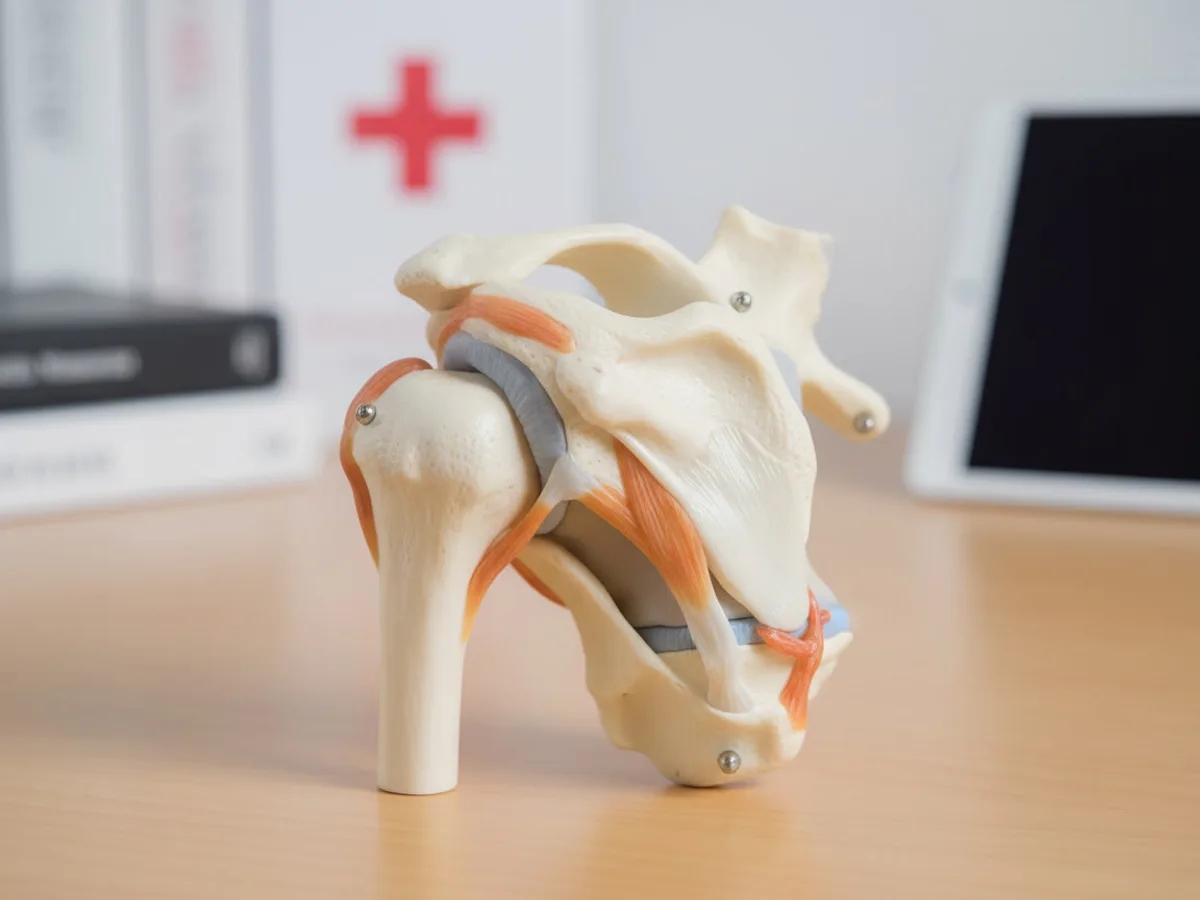
Shoulder pain from repetitive overhead work usually isn’t the result of one bad moment. It’s cumulative. The rotator cuff tendons pass through a narrow space under the shoulder blade every time the arm goes overhead, and repeated friction in that space, especially when the shoulder blade itself isn’t moving correctly, leads to irritation, inflammation, and eventually impingement.
Why the Shoulder Blade Is Often the Real Problem
Most people assume shoulder pain means something is wrong with the shoulder joint itself, but Dr. Chavez frequently finds that the actual driver is poor shoulder blade mechanics. If the shoulder blade doesn’t rotate and glide properly as the arm lifts, the space available for the rotator cuff tendons shrinks every time the arm goes overhead, and that narrowed space is where the impingement and pain develop.
This is part of why shoulder pain from repetitive work doesn’t always respond well to rest alone. Resting reduces the irritation temporarily, but if the underlying shoulder blade mechanics never get corrected, the same impingement pattern picks right back up the moment the person returns to the same repetitive motion.
How Dr. Chavez Approaches It
The evaluation starts with looking at how the whole shoulder complex moves, not just where the pain is reported. That includes checking the thoracic spine, since restricted mid-back mobility limits how well the shoulder blade can rotate, along with the shoulder joint and the surrounding musculature.
Treatment typically combines:
- Chiropractic care to restore mobility in the thoracic spine and shoulder joint
- Sports rehabilitation exercises targeting the muscles that control shoulder blade positioning
- Massage therapy to address the tightness that develops in the surrounding muscles as they compensate for the restriction
What Improvement Actually Looks Like
Patients dealing with this kind of shoulder pain often describe a specific arc of motion where the pain is worst, usually somewhere in the middle of raising the arm. As the shoulder blade mechanics and thoracic mobility improve, that painful arc typically narrows and eventually disappears, which is a more reliable sign of real progress than pain simply feeling less intense at rest.
Staying Ahead of It
For workers whose job isn’t going to change, the goal isn’t avoiding overhead motion altogether. It’s making sure the shoulder has the mobility and strength to handle that demand without the mechanics breaking down. That’s a very different approach than simply managing the pain after it flares up, and it tends to hold up much better over a full work week.
If overhead reaching at work has turned into a shoulder that aches by the end of the day or catches at a certain point in the motion, schedule a visit with Dr. Chavez at Back 2 Health Chiropractic in Lubbock.