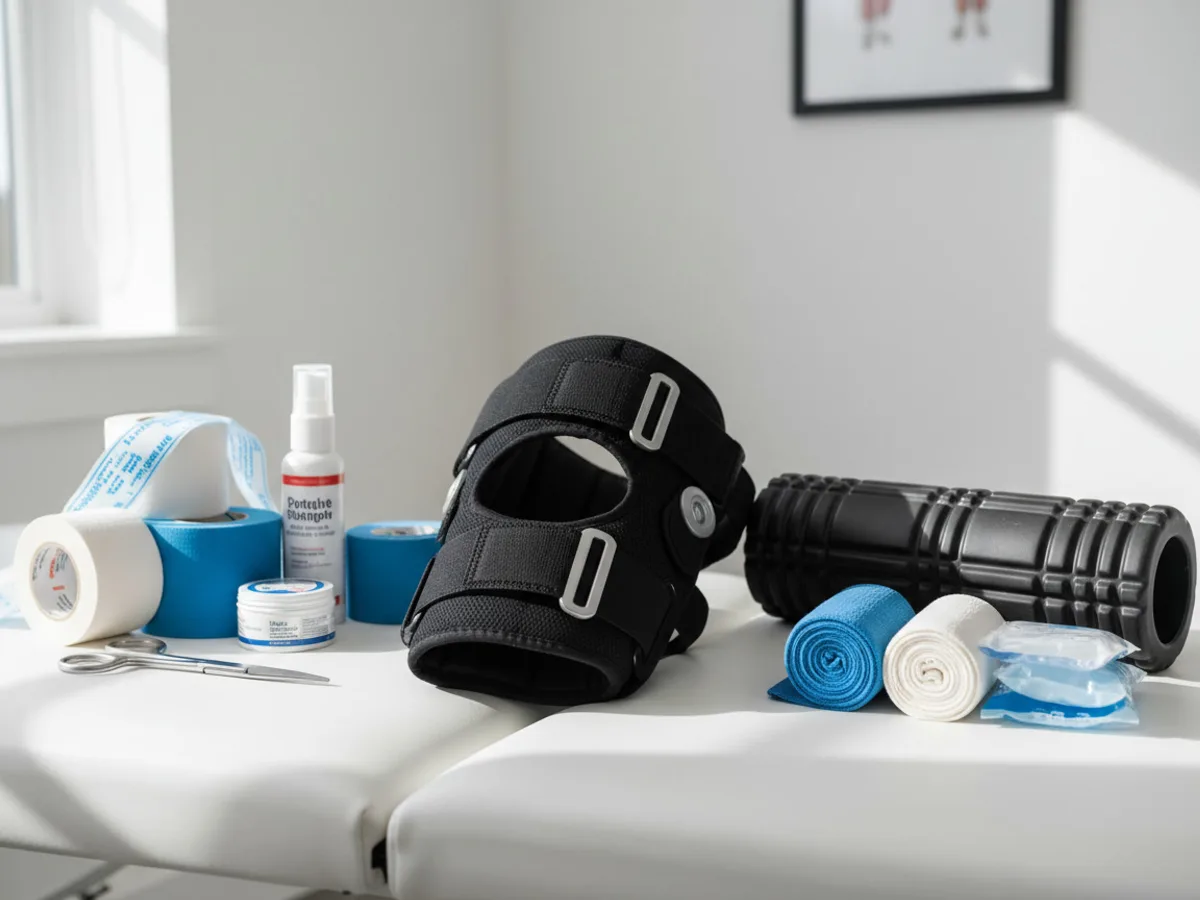
Spring Brings a Different Set of Injuries
Once track, baseball, softball, and soccer seasons pick up across Lubbock ISD schools and Texas Tech’s campus, Dr. Brett Chavez, D.C. sees a noticeable shift in the type of injuries walking through the door at Back 2 Health Chiropractic. Fall’s contact-heavy injuries give way to spring’s overuse and mechanical injuries: shin splints, hip flexor strain, low back pain from repetitive throwing or swinging motions, and knee pain from sudden increases in running volume.
Part of what drives this is the calendar itself. Athletes coming off a winter with less conditioning suddenly ramp up mileage, throwing volume, or sprint work over a few short weeks, and the body doesn’t always have time to adapt. The injuries that result aren’t usually dramatic. They build slowly, which is exactly why they get ignored until they’re a real problem.
Common Patterns Dr. Chavez Sees This Time of Year
- Throwing athletes (baseball, softball) developing shoulder and elbow strain from pitch count and mechanics issues
- Runners and sprinters dealing with shin splints, hip tightness, or lower back pain tied to running form
- Soccer players with hip and groin strain from repeated directional changes
- Growing teenage athletes experiencing growth-plate-related knee or heel pain during a growth spurt
That last category deserves its own mention. A young athlete’s bones can grow faster than the surrounding muscles and tendons can stretch to accommodate, which creates real, mechanical pain at the growth plate, not something a kid is imagining or exaggerating.
Why Alignment Matters for Performance, Not Just Pain
A restricted joint or a rotated pelvis changes how force moves through the body during a throw, a sprint, or a swing. That altered mechanics doesn’t just cause pain in the joint itself. It often shows up as decreased performance first: a pitcher losing velocity, a sprinter feeling “off,” a hitter losing power through the swing. Dr. Chavez evaluates the whole kinetic chain, not just the spot where it hurts, because the actual restriction is frequently somewhere else entirely.
How Chiropractic Care Fits Into an Athlete’s Season
For in-season athletes, the goal is keeping joints moving well enough that the body can adapt to training load without compensating in a way that creates a secondary injury. That typically means chiropractic care to address joint restriction, paired with professional stretching to maintain the flexibility that repetitive sport-specific motion tends to erode over a season.
For an athlete already dealing with an overuse injury, sports rehabilitation builds the strength and movement pattern correction needed to actually resolve the underlying cause, not just quiet the pain long enough to get through the next game.
A Note for Parents
It’s common for a young athlete to downplay pain because they don’t want to lose playing time. Dr. Chavez encourages parents to pay attention to changes in form, a limp that shows up after activity, or a kid who’s suddenly favoring one side warming up. Catching a mechanical issue early, before it changes how the athlete moves under load, is a lot easier to correct than waiting until it’s a season-ending problem.
If your student athlete is dealing with a nagging ache that isn’t going away with rest, or you want a baseline check before the season gets into full swing, schedule a visit at Back 2 Health Chiropractic in Lubbock.