Jaw Pain Rarely Starts With the Jaw Alone
A lot of patients arrive at Back 2 Health Chiropractic assuming their jaw pain or clicking is purely a dental issue, and sometimes it is. But Dr. Brett Chavez, D.C. evaluates the jaw as part of a connected system that includes the upper cervical spine, since the muscles and joints of the neck and jaw share nerve pathways and mechanical relationships that make TMJ dysfunction frequently tied to what’s happening in the neck as well.
Step One: Understanding the Pattern
The first visit starts with questions that map out the pattern: does the jaw click or lock, is there pain with chewing, is there a history of teeth grinding or clenching, and has there been any neck injury, even an old one, that preceded the jaw symptoms. Stress-related clenching, a common contributor to TMJ dysfunction, also comes up in this conversation since it shapes how the treatment plan gets built.
Step Two: The Physical Exam
Dr. Chavez examines the jaw’s range of motion and listens for clicking or popping during opening and closing, checks for tenderness in the muscles around the jaw joint and temples, and assesses the upper cervical spine for restriction. It’s common to find that the same side experiencing jaw dysfunction also has notable restriction in the upper neck, which is a meaningful clue about how the two are connected.
Why the Neck Connection Matters
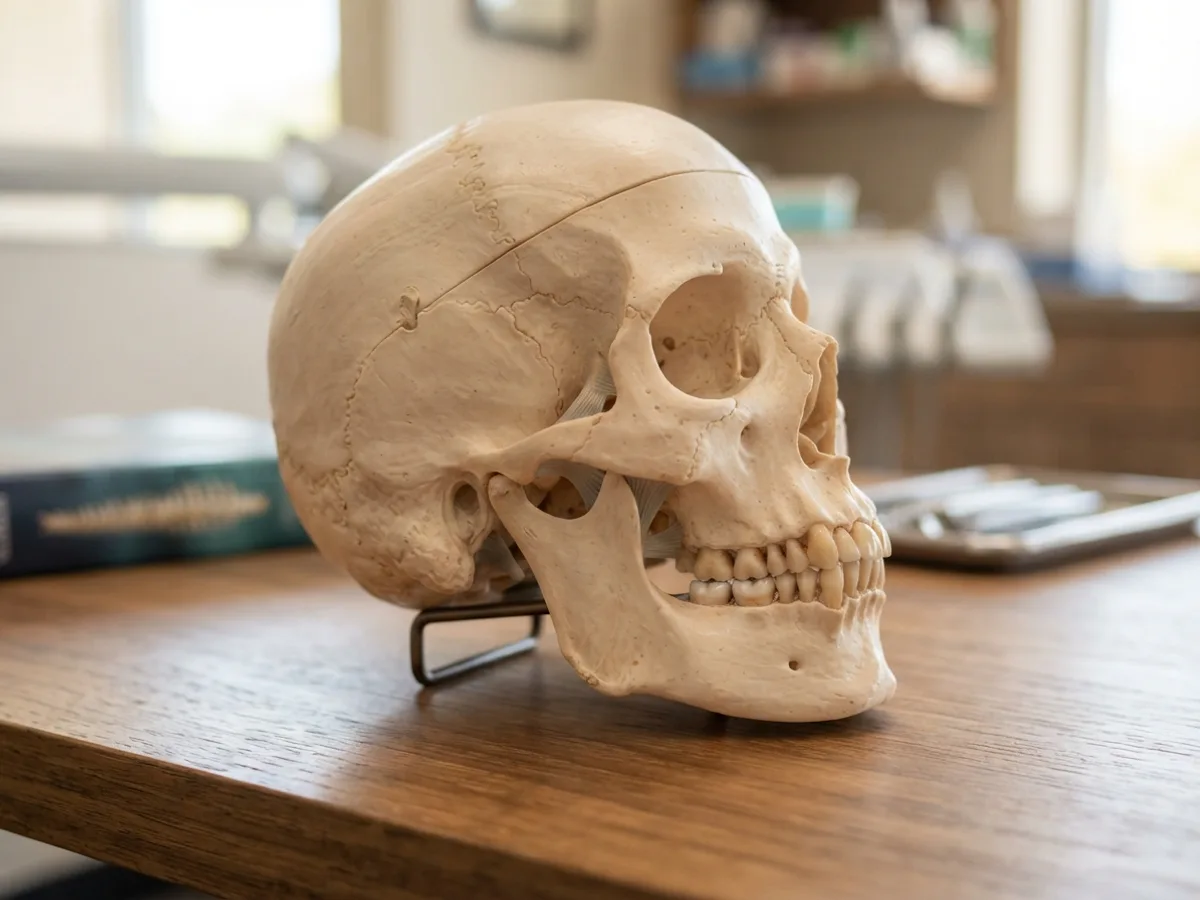
The upper cervical spine and the jaw share several of the same muscles, including ones that attach from the base of the skull down through the neck and up into the jaw and temple region. A restriction in the upper neck can alter jaw mechanics, and chronic jaw clenching can, in turn, create tension that refers into the neck and contributes to headaches. Treating the jaw without addressing the neck, or vice versa, often leaves part of the underlying pattern unaddressed.
What Treatment Typically Involves
- Chiropractic care focused on restoring mobility in the upper cervical spine
- Massage therapy targeting the jaw, temple, and neck muscles that tend to hold chronic tension in TMJ cases
- Practical guidance on reducing clenching habits, including awareness cues for daytime clenching that a lot of patients don’t realize they’re doing
What Improvement Typically Looks Like
Patients often notice a reduction in clicking or a wider, more comfortable range of jaw motion before pain fully resolves. Headaches tied to jaw tension, when present, also tend to improve as the muscular tension around the jaw and upper neck settles.
When to Involve a Dental Specialist
Not every case of jaw pain is purely mechanical. Dr. Chavez refers out to a dental or oral specialist when there’s evidence of a structural issue with the teeth or joint itself that’s outside the scope of chiropractic care, since TMJ dysfunction sometimes needs a combined approach between disciplines.
If jaw clicking, tension headaches, or pain with chewing has been part of your routine for a while, schedule a visit with Dr. Chavez at Back 2 Health Chiropractic in Lubbock to find out whether the neck is part of the picture.