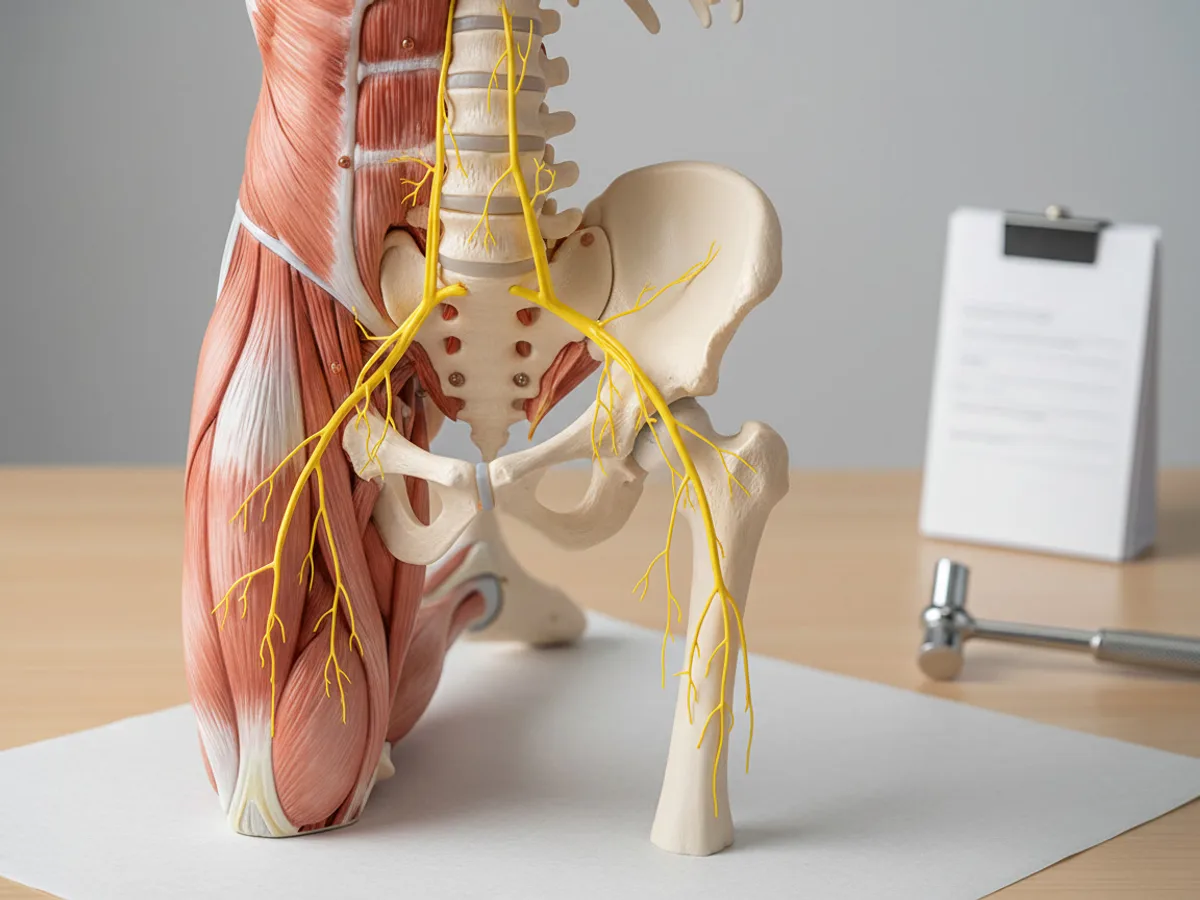
Sciatica Is a Symptom, Not a Diagnosis
Most patients who call Back 2 Health Chiropractic describing sciatica are describing a symptom, not a diagnosis. Sciatica is the pain, numbness, or tingling that radiates down the leg when the sciatic nerve is irritated somewhere along its path. What’s actually causing that irritation, a disc bulge, a tight piriformis muscle, a misaligned pelvis, varies from person to person, and figuring out which one it is drives the entire first visit.
Step One: The Conversation
Dr. Brett Chavez, D.C. starts by asking specific questions that narrow down the likely source. Where exactly does the pain travel? Is it worse sitting or standing? Does it shoot down with a cough or a sneeze, which suggests disc involvement? Did it start suddenly after a specific movement, or has it built up gradually? These details matter because different causes of sciatica respond to different treatments, and getting this part right shapes everything that follows.
Step Two: The Physical Exam
From there, Dr. Chavez runs through orthopedic tests designed to reproduce or clarify the nerve irritation. This typically includes straight leg raise testing, checking reflexes and strength in the leg, and palpating along the spine and hip to identify areas of restriction or muscle guarding. This exam does a lot of the diagnostic work on its own, often pointing clearly toward a disc-related cause versus a muscular one like piriformis syndrome.
Step Three: Imaging, When It’s Warranted
If the history and exam suggest a disc issue, or if the pain is severe or has lasted a while without improvement, X-rays are typically taken right there in the office. This confirms whether there’s disc space narrowing or other structural changes contributing to the nerve irritation, which helps determine whether decompression-based treatment is appropriate.
Step Four: Building the Plan
Once Dr. Chavez has a clear picture of the actual source, the plan gets built around it. For sciatica traced back to a disc issue, that often means spinal decompression paired with chiropractic care to reduce the pressure on the nerve directly. For sciatica driven more by muscular tightness or pelvic misalignment, the plan may lean more heavily on adjustment and massage therapy to release the muscles compressing the nerve.
What Patients Often Don’t Expect
A lot of patients come in expecting a single adjustment to fix sciatica outright. In reality, nerve irritation of this kind usually takes a series of visits to resolve, since the nerve itself needs time to calm down even after the mechanical cause has been addressed. Dr. Chavez sets realistic expectations at the first visit about how the timeline typically unfolds, so patients aren’t discouraged if the leg pain doesn’t disappear after the very first session.
Why Getting an Accurate Source Matters
Treating sciatica without identifying its actual source is a common reason people cycle through months of ineffective care. A muscular cause treated like a disc problem, or vice versa, tends to produce inconsistent results. The first visit at Back 2 Health is built specifically to avoid that guesswork.
If pain is radiating down your leg and you want a clear answer about what’s actually causing it, schedule a new patient visit with Dr. Chavez in Lubbock.